Sin Bins in Football: How Temporary Dismissals Work
A sin bin removes a player for a set period rather than the whole match. The two systems, the timing rules, and why elite football does not use it.
A sin bin sends a player off for a fixed period instead of the whole match. The formal name is a temporary dismissal, the standard period is 10 to 15 percent of playing time, and in a normal 90-minute game that means 10 minutes off the pitch with the team a player short.
You will not see one in the Premier League. The Laws of the Game permit temporary dismissals in youth, veterans, disability and grassroots competitions only, and even then a national association or FIFA has to approve their use.
Why the punishment gap exists
Football's disciplinary system has always had a hole in the middle of it.
A yellow card costs a player nothing during the match itself. He carries a warning, plays on, and if the offence was cynical rather than clumsy he has probably decided the trade was worth it. A red card costs everything, and referees are reluctant to reach for it unless the offence genuinely deserves it.
Between those two there is nothing. Dissent, a deliberate handball to break up an attack, a bit of theatrical diving: none of them warrant sending someone off for good, and none of them are meaningfully punished by a caution.
The sin bin fills that gap with something a player actually feels while the game is still going on. Ten minutes with ten men is a real cost, paid immediately, by the team as well as the individual.
Two systems
Competitions choose between two versions, and they are not the same thing at all.
System A applies temporary dismissal to all cautionable offences. Every yellow card becomes ten minutes off. It is the stricter option and it changes how a match is played.
System B applies it only to specified offences. A typical list is dissent, simulation and deliberate handball. Everything else is punished with an ordinary yellow card, as normal.
System B is the more common choice, because it targets the offences the sin bin was designed for without turning every mistimed tackle into a numerical disadvantage.
| System A | System B | |
|---|---|---|
| Which cautions trigger it | All | Only specified offences |
| Other cautions | None, all are dismissals | Ordinary yellow card |
| Effect on the game | Substantial | Targeted |
The timing rules matter more than they look
Two details decide how much a sin bin actually costs, and both are easy to miss.
The clock starts at the restart. Not when the offence happened, not when the card came out, but when play restarts after the player has left the field. A player who walks off slowly is not shortening his own punishment.
Stoppages count. Time lost while the ball is out of play still runs down the period. This is the detail that stops a team from manufacturing delays to get their player back sooner, and it is the reason a sin bin in a scrappy, stop-start ten minutes can feel much shorter than one during flowing play.
When the period is up, the player returns with the referee's permission at the next stoppage. He does not run straight back on the moment the clock hits zero.
Two dismissals in one match
Under System A, a player who is sin binned twice serves the second period and then takes no further part in the match.
There is a sensible wrinkle here. Once that second period is served, the team may replace him with a substitute. The logic is that the side has already been punished twice with a numerical disadvantage, and keeping them a player down for the rest of the game would be a third punishment for two offences.
The card is still shown
This trips people up watching junior football for the first time. The referee shows a yellow card, then signals the temporary dismissal.
The caution is not replaced by the sin bin. It sits on the player's record like any other, counts towards suspensions in competitions that accumulate them, and appears in the match report. The sin bin is an additional consequence, not a substitute for the card.
Why elite football has not adopted it
The obvious question, given that dissent and cynical fouls are hardly rare at the top level.
The straightforward answer is that the Laws do not permit it there. Temporary dismissals remain restricted to the grassroots, youth, veterans and disability game, and any expansion would be a decision for the lawmakers rather than an individual league.
The less straightforward answer is that ten minutes with ten men is an enormous swing in a match where the margins are already thin, and handing a referee the power to decide a fixture that way is a bigger step than it looks. In a Sunday league game it is a proportionate correction. In a title decider it would be the story of the season.
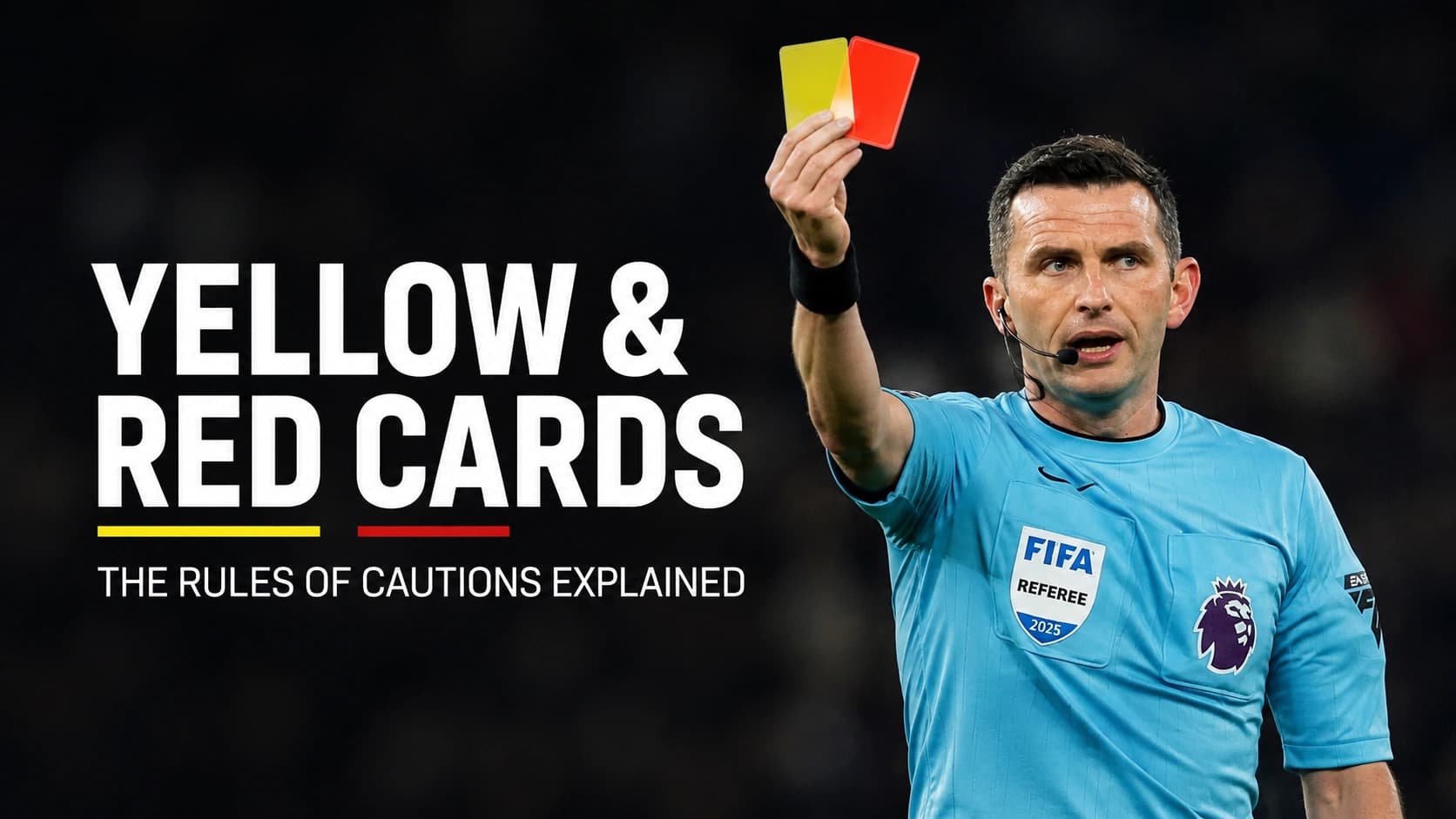
For how the normal card system works, including which offences are cautionable and what a caution costs beyond the match itself, see the yellow and red cards guide.
Frequently Asked Questions
What is a sin bin in football?
A sin bin, formally a temporary dismissal, removes a player from the pitch for a set period rather than the rest of the match. The standard period is 10-15% of playing time, which is 10 minutes in a 90-minute game.
How long is a football sin bin?
Between 10 and 15 percent of total playing time. That is 10 minutes in a 90-minute match and 8 minutes in an 80-minute match.
Do sin bins exist in the Premier League?
No. Temporary dismissals are permitted only in youth, veterans, disability and grassroots competitions, and only where the national association or FIFA has approved their use.
Does a sin bin replace the yellow card?
No. The referee shows the yellow card and then signals the temporary dismissal, so the caution still goes on the player's disciplinary record.
What happens if a player is sin binned twice?
Under System A the player serves the second period and then takes no further part in the match. Because the team has already been punished twice, the player may be replaced by a substitute afterwards.
When does the sin bin period start?
It begins when play restarts after the player has left the field, not when the offence happened. Time lost during stoppages counts towards the period.