What Does 'On Loan' Mean in Football?
What 'on loan' really means in football: who pays the wages, what a loan fee is, option vs obligation to buy, recall clauses, and the rules limiting how many players a club can borrow.
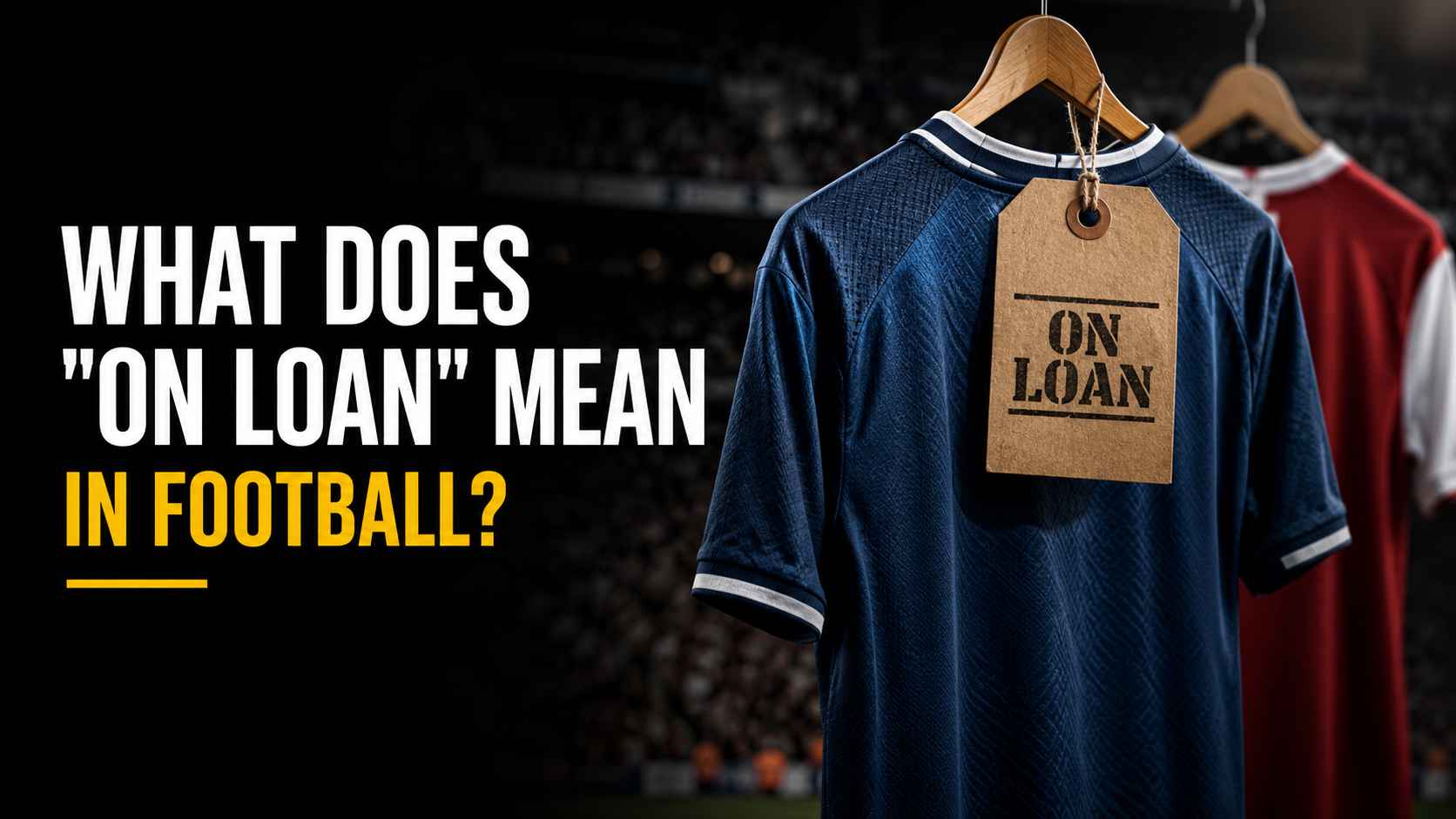
A loan in football is a temporary move. The player goes to another club for an agreed period, usually six months to a full season, while the club that owns their contract keeps it. When the spell ends the player goes back, unless the two clubs separately agree a permanent transfer.
You'll hear it constantly during transfer season: "he's gone out on loan" or "they've brought in a loan signing." Below is what actually changes for the player, who pays what, and the details that decide whether a loan works out or blows up in someone's face.
Parent club and loan club
The club that owns the player's contract is called the parent club. The club they go and play for is the loan club, or borrowing club. When the agreed period ends, the player is expected to return to the parent club, not stay at the loan club, unless a separate permanent deal gets agreed.
Think of it like borrowing a book from a library. The library still owns it. You get to use it for a while. Eventually it goes back, unless you decide to buy your own copy.
Why clubs actually do this
Loans exist because they solve a problem for both sides at once.
For the player, it usually means more playing time. A promising 19-year-old sitting behind two established internationals at a big club isn't developing much on the bench. Sent out on loan to a club where they'll actually start every week, they get real match experience instead.
For the parent club, it's a way to keep developing an asset without giving up on them. Rather than selling a talented young player outright, the club loans them out, lets another team pay some or all of their wages for a season, and gets a more experienced, more valuable player back afterward.
For the loan club, it's often a cheaper way to strengthen the squad. Instead of paying a full transfer fee, they might pay a smaller loan fee, or even just cover part of the player's wages, to use a player they couldn't otherwise afford.
There's also a less flattering reason, and it's worth being honest about it. A club with a player it no longer wants but can't sell, because he's too expensive or on wages nobody will match, can park him somewhere else for a season and take his salary off the books. Not every loan is a development plan.
Who actually pays for it
This is the part most explanations skip, and it's where loan deals are really negotiated.
Wages. There is no standard split. The borrowing club usually picks up all or most of the player's salary, because that's the main saving for the parent club. But when a parent club badly wants a young player to get minutes, it will often subsidise a share of the wages to make the move attractive. A big club can end up paying half the salary of a player it isn't even using.
Loan fee. Separate from wages, this is a payment for the right to use the player at all. Loans of fringe squad players frequently carry no fee whatsoever. Loans of players other clubs genuinely want can carry a fee running into the millions. The fee is essentially the price of a season's use.
Bonuses and add-ons. Appearance bonuses, goal bonuses and promotion bonuses all get written into loan agreements, and the parent club will sometimes take a cut of them.
So when you read "a season-long loan with no fee," that doesn't mean the move was free. It means no loan fee changed hands. Somebody is still paying that player every week.
Option to buy vs obligation to buy
These two phrases turn up constantly in transfer reporting and they mean very different things.
An option to buy gives the borrowing club the right to sign the player permanently at the end of the loan for a fee agreed in advance. It's a right, not a duty. If the player disappoints, the club sends him back and walks away. The parent club gets certainty on price but no certainty on the sale.
An obligation to buy is binding. Once its conditions are met, the permanent transfer has to happen. Crucially, obligations are usually conditional: the trigger might be a set number of appearances, the player staying fit, or the borrowing club winning promotion. This is why you'll occasionally see a club quietly stop selecting a loan player as he closes in on the appearance number that would force a purchase they no longer want to make.
There's a reason clubs like the conditional obligation. It lets a buying club spread the cost across two financial years, and it lets a selling club count on a sale. A straight option is the riskier structure for whoever owns the player.
Recall clauses and early endings
A loan doesn't automatically end early just because it's going badly. Once signed, the agreement runs for its stated term.
The exception is a recall clause, negotiated at the start, letting the parent club pull the player back. Recalls are typically restricted to a specific window, most often January, rather than being available at any moment. A parent club hit by injuries, or one that has decided the loan club isn't playing the player enough, uses the recall to bring him home.
If there's no recall clause, the parent club is stuck. A manager watching a prized 20-year-old sit on another club's bench for six months has no remedy beyond a phone call and some strong words. Agents push hard for playing-time guarantees precisely because of this.
The clause about facing the parent club
You'll sometimes hear that a loan player "isn't allowed to play against his own club." This clause exists because a parent club doesn't fancy losing a match to a player it's paying for.
How it's treated varies. Some competitions have moved to bar such clauses outright, on the grounds that a team fielding a weakened side against one specific opponent distorts the integrity of the league. In other places it remains a private matter between the two clubs. If you see a loan player mysteriously left out for one fixture, this is often why.
The rules that limit loans
Loans used to be almost unregulated, and some clubs accumulated dozens of players parked around the world. FIFA introduced international loan limits to stop that, phased in from 2022 and tightening over subsequent seasons. The framework works roughly like this:
- A cap on how many players a club can loan out internationally, and a matching cap on how many it can bring in, per season.
- Exemptions for young players and club-trained players, so genuine development loans aren't punished by the cap.
- A limit on loans between the same two clubs in a season, to stop one club being used as a feeder for another.
- No sub-loans. The borrowing club can't loan the player straight on to a third club.
- A maximum loan length of one year, and a written agreement setting out duration, fee and wages.
On top of that, each domestic league adds its own rules: how many loan players can be in a matchday squad, how many can come from any single club, and whether loans between two clubs in the same division are allowed at all. These differ significantly between competitions and get revised regularly, so check your own league's current handbook rather than assuming.
What a loan costs the player
One thing rarely mentioned: the player's contract keeps running down during the loan. A player with two years left who spends a season on loan comes back with one year left, and a club with a player in the final year of his deal has lost most of its leverage to sell him.
This is why loans and contract renewals so often get announced together. A club sending a young player out for a season will frequently sign him to a new long-term deal first, so the asset doesn't quietly expire while he's playing somewhere else. If you see "new contract, then loan move," that's what's happening.
The player carries real risk too. A loan into a badly-run club, a manager who doesn't rate him, or a relegation fight where nobody trusts a 19-year-old, can cost a career year. Loans are not automatically good for development. The right loan is.
What happens when the loan ends
A few different things can happen once the agreed period is up:
- The player returns to the parent club and fights for a place in the first team, sometimes with a much stronger case than before they left.
- The loan gets extended, if both clubs and the player agree to continue the arrangement.
- The move becomes permanent, through an option or obligation to buy.
- The player is sold elsewhere entirely. A strong loan season is often what makes a third club interested in the first place, and the parent club cashes in.
Loan vs. transfer: the key difference
It's easy to mix these up, but the distinction is simple:
- A transfer is permanent. The buying club now owns the player's contract, full stop.
- A loan is temporary. The player is still under contract to their original club and is expected to go back there.
Loan deals fall apart late for many of the same reasons permanent ones do, which we cover in why transfers collapse at the last minute.
So next time you see a player wearing a new shirt but still described as being "on loan," you'll know what to ask: who's paying his wages, is there an option or an obligation attached, and can his parent club pull him back in January? Those three answers tell you what the deal actually is.
Frequently Asked Questions
What does 'on loan' mean in football?
It means a player has temporarily moved to a different club while still being contracted to their original club. When the loan period ends, the player returns to the club that owns their contract.
Does the player still belong to their original club while on loan?
Yes. The player's contract stays with their original club, called the parent club, throughout the loan. The loan club only has temporary use of the player.
Who pays a loan player's wages?
It is negotiated deal by deal. The borrowing club often pays all or most of the wages, but a parent club keen to get a young player game time may subsidise a share of them. There is no fixed rule.
What is a loan fee?
A payment from the borrowing club to the parent club for the right to use the player, separate from wages. Loans of squad players are often free, while a loan for a player another club really wants can carry a substantial fee.
Can a loan move become permanent?
Yes, and it is very common. Loan deals often include an option to buy, letting the borrowing club sign the player for a pre-agreed fee, or an obligation to buy, which forces the deal through once agreed conditions are met.
What is the difference between an option to buy and an obligation to buy?
An option is a choice the borrowing club can walk away from. An obligation is binding: once its trigger is met, such as a number of appearances or promotion, the permanent transfer has to go ahead.
Can a club end a loan early?
Only if the loan agreement contains a recall clause, which is usually written to apply in a specific window such as January. Without one, the parent club cannot simply take the player back mid-loan.
Can a player on loan play against their parent club?
It depends on the competition and the agreement. Some leagues bar clauses that block a player from facing their parent club, on the grounds that they distort sporting integrity, while elsewhere the clause is still negotiated privately.
Why would a big club loan out a good young player instead of playing them?
Because first-team minutes at a top club are limited, and a young player develops faster playing regularly elsewhere than sitting on the bench. The parent club gets a more experienced player back once the loan ends.
Is a loan the same as a transfer?
No. A transfer is permanent: the buying club owns the player's contract outright. A loan is temporary, and the player is expected to return unless a permanent deal is separately agreed.