The Five-Second Countdown on Throw-Ins and Goal Kicks
Referees can count down five seconds on a slow throw-in or goal kick. Miss it and the throw changes hands, or the goal kick becomes a corner.
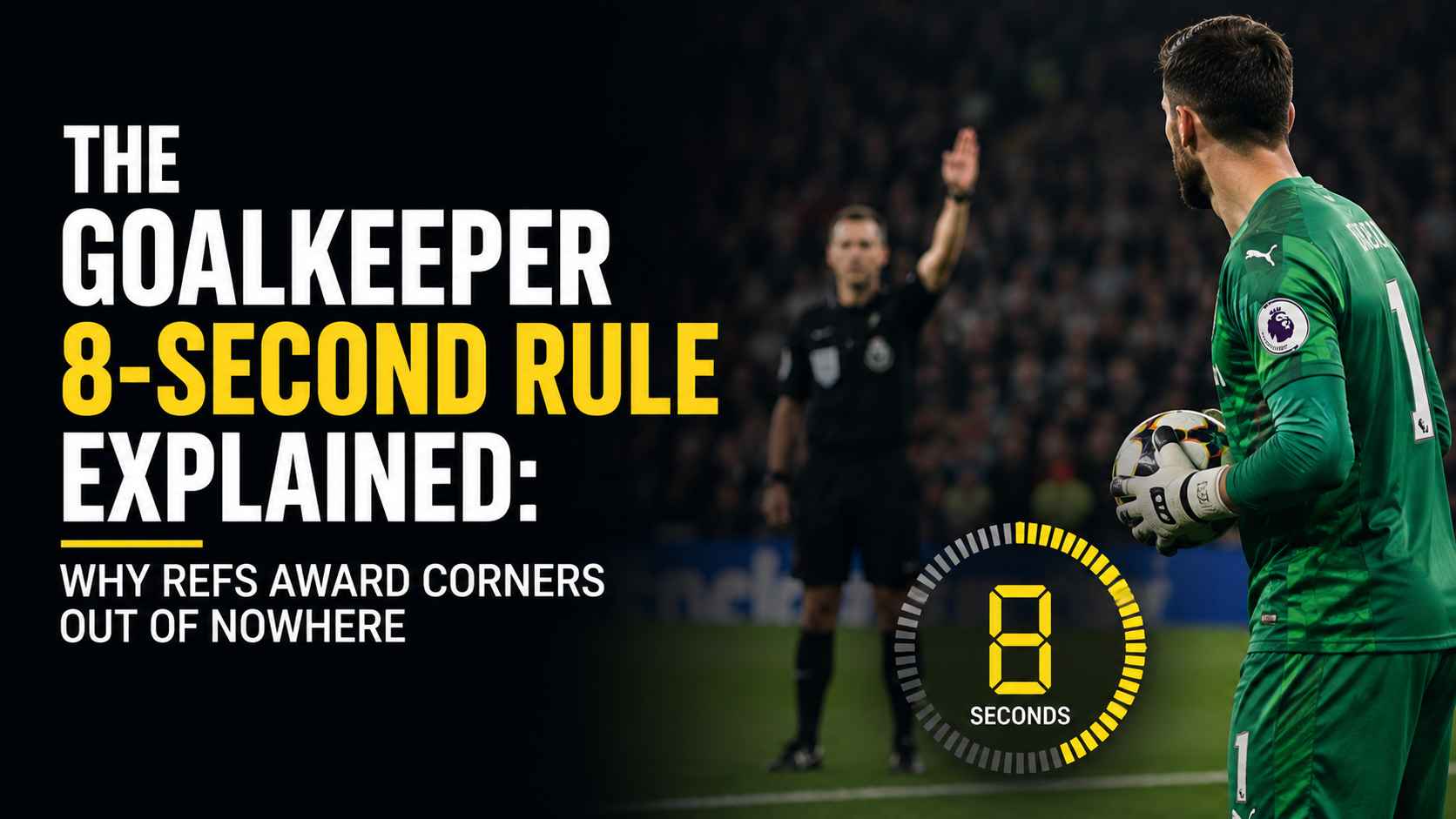
A referee can start a visible five-second countdown when a team is dragging out a throw-in or a goal kick. Let it reach zero and the restart changes hands: the throw-in goes to the opposition from the same spot, and the goal kick becomes a corner for the other team.
This is a protocol in the Laws of the Game, and it is aimed squarely at the last ten minutes of a match your side is winning.
Why it exists
Time-wasting at a restart has always been the cheapest trick in football, and for most of the game's history it was effectively free.
A goalkeeper who takes forty seconds over a goal kick was, at worst, spoken to. A throw-in taken by the corner flag, then handed to a team-mate, then taken by a third player, cost nothing. Referees could add the time back on, but stoppage time arrives at the end of the match, not at the moment the advantage is being taken, and a team defending a one-goal lead will happily trade thirty seconds now for thirty seconds later.
The countdown changes the currency. It stops paying the offence back in added time and starts paying it back in possession.
How the countdown works
The referee does not run a clock on every restart. That would be unplayable and it is not what the protocol asks for. The count starts when the referee judges that a team is deliberately delaying.
When that judgement is made, the signal is deliberately theatrical, because it has to be visible to the player, the opposition and the crowd at once:
- The referee blows the whistle.
- They signal clearly with hand or arm for the restart to be taken.
- They count down from five with a raised hand, often out loud as well.
No warning is required first. In practice most referees will use the whistle and voice to hurry a player along before starting the count, but they are not obliged to.
What happens at zero
The two sanctions are different, and the difference is not arbitrary.
| Restart | If the countdown expires |
|---|---|
| Throw-in | Throw-in awarded to the opposing team, same position |
| Goal kick | Corner kick to the opposing team, nearest side |
A throw-in simply changes hands. That is a modest penalty for a modest offence, and it happens in a part of the pitch where possession is often not worth much anyway.
A goal kick becoming a corner is a far heavier punishment, and that is the point. Goal kicks are where the serious time-wasting happens, in front of a goalkeeper's own supporters, with the ball placed and replaced and the tee adjusted. Handing the attacking team a corner makes the delay actively dangerous.
It is the same logic that produced the goalkeeper eight-second rule, where holding the ball too long also concedes a corner rather than the old indirect free kick. The lawmakers worked out that referees will only enforce a sanction they consider proportionate, and that a corner is one they will actually give.
The card is not automatic
A detail worth knowing, because people assume otherwise.
Running the countdown down to zero is not in itself a bookable offence. The restart changing hands is the punishment.
A caution enters the picture only if the player, or a team-mate, then goes on to excessively delay the opposing team's restart, which is a separate offence and always has been. Kicking the ball away, standing in front of the throw, blocking the corner: those get the yellow card, not the slow throw that preceded them.
What it looks like in practice
If you are watching and you see a referee raise an open hand near a touchline while a player is holding the ball above their head, that is the countdown. The hand comes down a finger at a time.
Most of the time the restart happens on three or four and nothing comes of it, which is exactly what the protocol is designed to achieve. A rule that regularly changed possession would be a rule that was failing, in the same way that a speed camera which never issues a ticket is doing its job.
For the wider picture of how referees account for lost time, and why the board at the end of a half shows the number it does, see the stoppage time guide.
Frequently Asked Questions
How many seconds do you get to take a throw-in?
There is no clock on every throw-in. But if the referee judges a team is deliberately delaying, they can start a visible five-second countdown, and the restart must be taken before it reaches zero.
What happens if you take too long over a throw-in?
The throw-in is awarded to the opposing team from the same position.
What happens if a goalkeeper takes too long over a goal kick?
The opposing team is awarded a corner kick, taken from the nearest corner.
Does the referee have to warn you first?
No. The count can begin without a prior warning, though a referee will often use the whistle and voice first to tell a player to get on with it.
Is the player booked for running down the countdown?
Not automatically. A caution follows only if the player or a team-mate then goes on to excessively delay the opposing team's restart.
Which restarts does the countdown apply to?
Throw-ins and goal kicks, under Laws 15 and 16.